

Table of Contents
A temperature humidity test chamber is one of those purchases that looks simple on a catalogue page and gets complicated the moment you have to sign for it. Two suppliers quote chambers that both say “-40 to 150°C, 20 to 98%RH” and the prices differ by 40%. The difference is buried in pull-down rates under load, refrigeration architecture, and the exact meaning of the word “uniformity”.
We build these chambers in our own factory, so we spend a fair amount of time unwinding quotes that were written to look identical while describing different machines. This guide walks through the decisions in the order a buyer actually meets them: what the chamber does, which standards drive the requirement, how to size it, what the accuracy terms mean, what a reasonable price looks like in 2026, and which line items belong in your RFQ.
What Is a Temperature Humidity Test Chamber?
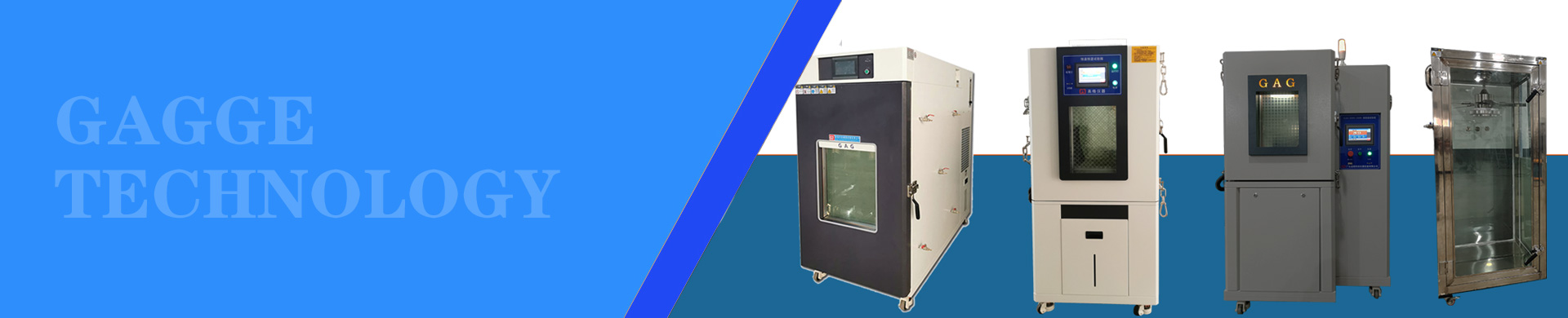
A temperature humidity test chamber creates controlled combinations of temperature and relative humidity around a product, so you can watch how the product responds before your customer does. A sealed cabinet holds the test space, a refrigeration system pulls it down to the low setpoint, heaters push it up, and a steam generator or similar humidification source raises relative humidity while the control system trims all three against each other. Our own environmental testing equipment series is built around this category, alongside the thermal shock and altitude units that share the same refrigeration platform.
It simulates what products experience in storage, shipping and service: a container crossing the tropics at 40°C and 90%RH, an electronics cabinet in an unheated warehouse, a night in a desert where the temperature swings 25 degrees. Typical products put through this include circuit boards and finished electronics, plastics and rubber parts, coatings and adhesives, food packaging, building materials and batteries.
Two test modes cover most work. A constant test holds one fixed condition for hours or days, the way IEC 60068-2-78 holds 40°C and 93%RH. A cycling test moves between conditions on a program, the way a damp heat cycle moves between 25°C and 55°C with high humidity. Any modern chamber does both from a programmable touchscreen controller, and exports the profile data afterwards for your records.
Which Standards Require Temperature and Humidity Testing?
Most buyers arrive at this purchase because a customer, an auditor or a certification body pointed at a clause. The standards below come up most often in our order book:
| Standard | Test | Typical condition |
|---|---|---|
| IEC 60068-2-78 / GB/T 2423.3 | Damp heat, steady state | 40°C at 93%RH |
| IEC 60068-2-30 / GB/T 2423.4 | Damp heat, cyclic | 25 to 55°C, ≥95%RH, 12h+12h cycles |
| IEC 60068-2-1 / -2-2 | Cold / dry heat | Setpoint held at defined tolerance |
| IEC 60068-2-14 | Change of temperature (cycling) | Two-temperature cycling, defined rates |
| MIL-STD-810 (Method 507) | Humidity, induced and cyclic | Multiple profiles, defense and aerospace |
| ISTA series | Transit packaging | Prescribed conditioning before drop/vibration |
| UN 38.3 (T2) | Thermal cycling for cells/batteries | 72°C to -40°C, ten cycles (what T1 to T8 each require) |
One caution before you copy conditions out of a standard: some clauses specify conditions at the sample, not at the chamber air sensor. If your customer audits, they will ask how you know the sample saw the condition. That question leads straight to the accuracy terms in the next sections, which is exactly where cheap and expensive chambers separate.
What Temperature Range Do You Actually Need?
Most laboratories order one of three ranges, and the honest answer is that the low end of the range drives the price far more than the high end:
-20°C to 150°C: the standard range
Single-stage refrigeration reaches this. It covers damp heat work, dry heat aging, and most commercial electronics testing. If your standards never go below freezing in a controlled way, buy this and spend the difference on a better controller or more volume.
-40°C to 150°C: the common choice
Still single-stage in most designs, though it wants a properly sized condensing unit. This is where most electronics and automotive-supplier labs land, because it covers cold storage simulation and most IEC and MIL cycling profiles. When a customer tells us “-40”, we know they have read their standard.
-70°C to 150°C: cascade territory
Below roughly -40°C you need two refrigeration stages running a cascade loop, which adds a compressor, a heat exchanger and real money. -70°C matters for battery work (UN 38.3 test T2 cycles to -40°C, but some corporate specs go colder), aerospace components and some material qualification. Buy it if a document demands it, not because it feels safer on a datasheet.
A practical note from our production floor: the cooling rate and the low-temperature guarantee are two different claims. A chamber that reaches -40°C empty may take far longer to pull down with a full thermal mass inside. Ask for the pull-down curve with load, and make the vendor state the load.
How Big Should the Chamber Be?
Chambers are quoted by internal volume, and the most common sizing mistake is buying the volume that equals the sample plus a bit. Air has to circulate around the sample for the uniformity numbers to mean anything. The working rule used across the industry: the sample should occupy no more than one third of the working volume, and never block the return airflow path.
Our own series runs from 100L to 1000L, which covers the majority of lab and production-floor applications:
| Internal volume | Typical internal size (W×D×H) | Suits |
|---|---|---|
| 100L | 40×50×50 cm | PCB assemblies, small components, benchtop labs |
| 150L | 50×50×60 cm | Small housings, material coupons |
| 252L | 60×60×70 cm | Mid-size electronics, multiple small samples |
| 408L | 60×80×85 cm | Assembled units, battery packs |
| 800L | 80×100×100 cm | Large assemblies, racks of samples |
| 1000L | 100×100×100 cm | Finished products, packaging, mixed loads |
Three sizing checks worth doing before you commit. First, draw your largest sample with its fixture and its wiring on paper, because test leads and a mounting bracket eat more space than people expect. Second, plan the loading path: a 408L chamber sits on the floor and loads from the front at waist height, while a 100L benchtop unit needs a bench that takes 260 kg of machine weight. Third, remember the outer dimensions, not just the inner ones. A 1000L chamber stands over two meters tall once the refrigeration section and casters are included, and it will not fit through every door or under every ceiling.
Fluctuation, Deviation, Uniformity: What Do These Terms Mean?
This is the section that saves money, because these three words are the most abused numbers in the industry. Suppliers quote them in different orders and sometimes different definitions, and a buyer who compares them directly can end up paying a premium for a number that does not mean what they think it means.
Temperature fluctuation
How much the chamber air drifts around a fixed setpoint over time, at one point in the space. A chamber holding 40.0°C with fluctuation of ±0.3°C will wander between roughly 39.7 and 40.3°C at its control point. Better controllers and steadier refrigeration give smaller fluctuation. For most standards, ±0.3 to ±0.5°C is comfortably tight.
Temperature deviation
The difference between the actual condition at a measured point and the setpoint. IEC 60068-3-5 style verification cares about this. A chamber may hold steady (small fluctuation) while sitting half a degree away from setpoint (deviation), which is why calibration matters even on expensive machines.
Temperature uniformity
How consistent conditions are across the working space at the same moment, usually expressed as the maximum spread between the worst points in a multi-point verification. This is the number that fails audits when samples are stacked against the walls or blocking the return duct. Typical lab-grade figures run 1.0°C at moderate temperatures, loosening toward 1.5°C as you push toward the top of the range.
The trap: one vendor quotes “±0.5°C” meaning fluctuation, another quotes “≤1.0°C” meaning uniformity, and neither number is comparable. In your RFQ, require all three terms separately and define them by reference to the standard you are being audited against. Any chamber builder who resents that question is telling you something.
The same trio exists for humidity, where uniformity of ±3%RH or better is a normal lab-grade target, and resolution of 0.1%RH on the controller is standard on any machine worth buying.
Why Is Humidity Limited at Low Temperatures?
A quotation that says “20 to 98%RH” almost always has a footnote, or should. Relative humidity is tied to the dew point of the air in the chamber, and the achievable RH window narrows at temperature extremes in both directions.
At the cold end, holding low RH while the chamber is near or below freezing means actively removing moisture, which requires deeper dehumidification than a standard steam system provides. That is why many chambers guarantee 20%RH only within a mid-band of temperatures, roughly from just above ambient up to 80 or 85°C, with the achievable RH rising as the setpoint drops. At 0°C, expecting 20%RH from a standard machine is not realistic.
At the hot end, high humidity becomes a boiling-water problem: 95%RH at 85°C demands a much larger vapor supply than 95%RH at 40°C, and steam quality starts to matter for the sample as much as for the air.
And if a datasheet promises 10%RH, that is a different machine again. Reaching single-digit dew points needs a dry-air or desiccant-assisted system, and it is a legitimate option on our chambers, but it is an option you select, not a default that comes free with the humidity system. Ask the vendor for the RH-versus-temperature envelope chart rather than a single headline number. Every serious builder can produce one, and comparing two envelopes tells you more than comparing two datasheets.
How Much Does a Temperature Humidity Test Chamber Cost?
Prices in 2026, FOB China, for new machines with a programmable controller. Treat these as planning bands, not quotes; options and refrigeration range move the number more than volume does.
| Class | Typical configuration | FOB price band |
|---|---|---|
| Benchtop | 100 to 150L, -20°C, standard humidity | 3,000 to 6,000 USD |
| Standard floor | 252 to 408L, -40°C, 20–98%RH | 7,000 to 15,000 USD |
| Cascade | 252 to 1000L, -70°C | 18,000 to 45,000 USD |
| Walk-in / custom | Rooms, drive-in, special profiles | 60,000 USD and up |
Four things legitimately move a quote up. A deeper cold range (cascade refrigeration) is the big one. A faster cooling rate, from the standard 1°C/min toward 3 or 5°C/min, is the second. Larger volume costs more in sheet metal, refrigeration capacity and freight. And brand-name components in the refrigeration circuit, the compressors in our chambers are Tecumseh and Copeland units for a reason, cost more than unbranded equivalents but fail less in the field.
What should not be cheap is the parts that fail. A chamber is a 10 to 15 year asset whose most common failure points are the refrigeration circuit, door seals, and the humidity water system. If a quote is dramatically below the bands above, the savings usually live in exactly those components.
Which Specs Belong in Your RFQ?
Send a spec sheet, not a sentence. The fastest way to get a comparable set of quotations is to issue the same structured sheet to every vendor. As a reference point, here is the actual specification sheet for our GAG-E201 series, which is the configuration most labs land on:
| Item | Specification |
|---|---|
| Model | GAG-E201 (with humidity) / GAG-E202 (temperature only) |
| Internal volume | 100 / 150 / 252 / 408 / 800 / 1000 L, custom on request |
| Temperature range | -20 to 150°C, -40 to 150°C, or -70 to 150°C |
| Temperature fluctuation | ±0.3°C |
| Temperature deviation | ±1.0°C up to 100°C; ±1.5°C up to 150°C |
| Temperature uniformity | 1.0°C up to 100°C; 1.5°C up to 150°C |
| Heating rate | ≥3°C/min |
| Cooling rate | ≥1°C/min (3 or 5°C/min optional) |
| Humidity range | 20 to 98%RH (10 to 98%RH optional) |
| Humidity resolution / uniformity | 0.1%RH / <±3%RH |
| Interior / exterior | SUS304 stainless / Fe360B steel with high-temperature coating |
| Controller | Touchscreen, constant and programmable modes, data download and export |
| Refrigeration | Tecumseh / Copeland brand compressors |
| Power supply | 220V or 380V, selectable |
Alongside the sheet, five questions separate a careful builder from a catalogue reseller:
Pull-down performance with load. What is the cooling curve with a defined thermal mass inside, not empty?
Verification method. Is the machine delivered with a multi-point uniformity report, and per which standard?
Humidity envelope. The full RH-versus-temperature chart, not a headline range.
Service reach. Who installs it, who answers when a compressor trips at 2 a.m., and how long do spare parts take?
Calibration support. What comes with the machine for the annual calibration your quality system will demand?
A note on standards compliance language: “meets IEC 60068” on a datasheet is a claim, not a certificate. What you want is a chamber whose performance was verified by the methods in IEC 60068-3-5 or an equivalent verification standard, with the report to show for it. That is a fair question to put to any supplier, and the answers are usually revealing.
Temperature Humidity Test Chamber FAQ
Should I buy one chamber with humidity or two separate chambers?
If your testing is genuinely split between hot/cold cycling and damp heat work, one chamber with humidity does both, and a GAG-E202-style temperature-only unit as a second machine often costs less than a single oversized combined chamber. It depends on throughput. The error to avoid is buying one small combined chamber and queuing every test behind every other test. If your work extends into battery abuse testing, that is a different category of machine entirely, and our battery nail penetration test machine guide explains how those differ from environmental chambers.
What is the difference between GAG-E201 and GAG-E202?
The E201 includes the humidity system, 20 to 98%RH. The E202 is the same cabinet and control platform without humidity generation, for labs that only do temperature work. Buying temperature-only when you do not test humidity saves the humidifier, the water treatment and part of the maintenance burden.
How long does a chamber last?
Fifteen years is a reasonable design expectation for the cabinet and control system. Refrigeration compressors are the wear item; branded units like the Tecumseh and Copeland compressors we fit typically run a decade before a planned replacement, and they are field-serviceable. Water quality decides the life of the humidity system, which is why we keep saying demineralized water.
What maintenance does a chamber need?
Condenser cleaning on a schedule, door seal inspection, water system flushing, and annual calibration. None of it is skilled work except the refrigeration, and most of our overseas customers handle the routine items in house with a parts kit we ship with the machine.
Does the chamber need special power or water?
Larger volumes and cascade machines run on 380V three-phase; smaller 220V units exist for the 100 to 150L class. The humidity system wants demineralized or distilled water with drainage nearby. If your building cannot supply demineralized water, add a treatment cartridge to the order rather than feeding it tap water and replacing the humidifier early.
How is delivery capacity verified before shipment?
Every chamber runs a full functional test at our factory: pull-down to the lowest setpoint, ramp rates, humidity extremes, and a multi-point uniformity check. We supply the test report with the machine, and customers are welcome to witness the test in person or by video call before it ships.
What information do you need to quote a chamber?
Internal volume or sample size, the temperature range and rate you need, whether humidity is required and at which temperatures, your power supply, and the standard your testing answers to. With those five lines we can quote accurately, usually within two working days.
Build Your Test Plan Around the Right Chamber, Not the Catalogue
We manufacture the GAG-E series in our own factory, from 100L benchtop units to 1000L floor chambers, in -20, -40 and -70°C configurations with 20 to 98%RH humidity. Sixteen years of building test equipment, branded refrigeration components, and a controller your auditors will actually like.
Send us your sample size, your temperature and humidity requirements and the standard you test to. We will confirm the configuration, flag anything in your requirement that a standard chamber cannot do, and quote within two working days. Custom internal dimensions, faster ramp rates and 10%RH options are all on the menu.
Factory acceptance test with multi-point uniformity report included
Chamber sizes beyond the standard six volumes built to order
Lifetime technical support, spare parts stocked for every machine we ship
WhatsApp {{WHATSAPP}} | Email {{EMAIL}} | Request a quotation