


Table of Contents
A damp heat test is one of the cheapest reliability tests you can run and one of the easiest to run badly. The condition looks trivial: put the product in a warm, humid chamber for a while and see what happens. In practice, half the reports we see from customers cannot be compared with each other, because the chamber was loaded wrong, the humidity was measured at the sensor instead of the sample, or the samples went back on the bench wet and were measured before they recovered.
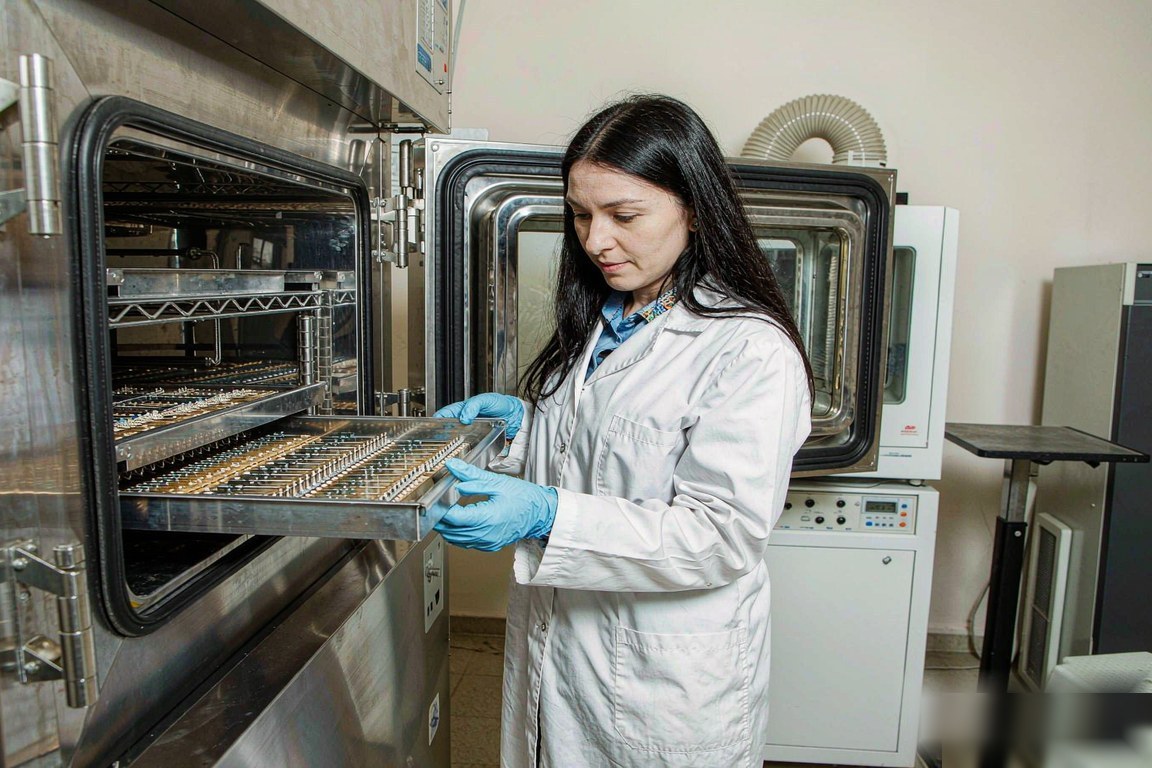
The method is defined in IEC 60068-2-78, and it is one of the most widely cited climatic tests in electronics, automotive, railway and industrial equipment qualification. It is also the test most often outsourced by companies that later decide to bring it in house, and the calculation behind that decision is the same one we describe in our guide to buying test equipment from China. This article covers what the standard actually asks for, how the two damp heat variants differ, what fails in the chamber, and the setup mistakes that quietly invalidate a test.
What Is a Damp Heat Test?
A damp heat test exposes a product to warm air at high relative humidity for a defined period, then checks whether its electrical and mechanical performance survived. It is not a water spray test and not a salt fog test. The sample is not wetted deliberately; the moisture comes from the air, and the damage happens through absorption, condensation and electrochemical effects at the surface and inside the housing.
The failure mechanisms it targets are specific: insulation resistance falls as moisture films form on surfaces, dissimilar metals corrode at joints, flux residue on a circuit board becomes conductive, adhesives and coatings blister or delaminate, and connectors develop leakage paths that only appear in humid conditions. None of these show up in a dry heat test, which is why the two are always specified together in a qualification plan.
Typical products tested this way: control boards and power supplies, automotive electronic modules, railway equipment, LED luminaires, connectors and terminals, sensors, telecom hardware, and any product with a housing, a gasket and a circuit inside it.
What Conditions Does IEC 60068-2-78 Specify?
The steady state variant is simple by design. The standard condition is 40 °C at 93% relative humidity, with tolerances of ±2 K on temperature and +2 / -3 percentage points on humidity. The sample is held at that condition for a defined duration, then removed and allowed to recover before measurement.
| Parameter | IEC 60068-2-78 (Test Cab) |
|---|---|
| Temperature | 40 °C ± 2 K |
| Relative humidity | 93% RH, +2 / -3% |
| Preferred durations | 2, 4, 10, 21 or 56 days |
| Sample state during test | Usually unpowered, sometimes powered as specified |
| Recovery | Typically 1 to 2 hours at 15 to 35 °C, 45 to 75% RH |
| Measurement | After recovery, not while wet |
Two details trip people up. First, 56 days is 1,344 hours of continuous running. That is a long time for a chamber, and it is where water consumption, drain capacity and humidity control stability stop being theoretical concerns. Second, the durations are not a menu you pick from for convenience: the duration is specified by the product standard or the customer, and substituting 10 days for 21 because the schedule is tight is a non-conformance, not a shortcut.
What about the humidity tolerance?
The asymmetric tolerance (+2 / -3) reflects the physics. It is easy to overshoot humidity and hard to pull it back quickly, so the standard allows a little upward drift but limits the downward side. A chamber that oscillates between 90 and 96% RH is not holding the condition, even if the average looks correct. Ask for the humidity control stability figure, not just the range.
Steady State or Cyclic: Which One Do You Need?
IEC 60068-2-78 is the steady state test. Its sibling, IEC 60068-2-30, is the cyclic damp heat test, and the two answer different questions. Steady state asks whether a product absorbs moisture and degrades. Cyclic adds the breathing effect: as the air cools, moisture condenses on and inside the product, and as it warms, that moisture is driven back out. Cyclic is harsher on sealed housings and on products that trap air.
| Item | IEC 60068-2-78 (steady state) | IEC 60068-2-30 (cyclic) |
|---|---|---|
| Temperature profile | Constant 40 °C | 25 °C to 55 °C, 12 h + 12 h |
| Humidity | 93% RH throughout | ≥95% RH during the high phase |
| Condensation | Avoided by design | Occurs during temperature fall |
| Preferred durations | 2, 4, 10, 21, 56 days | 2, 6, 12, 21, 56 cycles |
| Best for | Material absorption, insulation resistance | Sealed enclosures, breathing and condensation |
If your product standard cites 2-30 and you run 2-78, the report will be rejected. The confusion is common because both are called "damp heat" and both are run in a temperature humidity chamber. Check the clause number, not the test name. If you are still selecting the machine itself, our temperature humidity test chamber buying guide covers range, volume and the accuracy terms that decide whether a long test is repeatable.
Why 93% RH and Not 100%?
This is the question engineers ask most often, and the answer explains a lot about how to load the chamber. At 100% RH you get free water: droplets forming on the sample, running down surfaces, pooling in crevices. That is a different test with a different failure mode, closer to a water ingress test than a humidity test.
93% RH gives you saturated air without bulk condensation on the sample, as long as the sample is at or slightly above the air temperature and the chamber air is properly circulated. The intent is to test absorption and surface electrochemistry, not to simulate rain. It also leaves the control system some headroom, which is why the tolerance is asymmetric.
The practical consequence: anything that causes local condensation on the sample, such as a cold sample loaded straight from a cold room, a sample placed directly under a cold spot, or a chamber with poor air circulation, moves you out of the intended test condition. Let samples stabilize before the humidity is raised, and keep them out of dead zones.
What Actually Fails During a Damp Heat Test?
After a few hundred of these tests, the failure list is fairly predictable. It is rarely a dramatic failure; most of the time the product still works, and the problem is a parameter that drifted, a leakage current that appeared, or a cosmetic change that a customer will notice after a year in service.
| Failure mode | Where it shows up | Usual root cause |
|---|---|---|
| Insulation resistance drop | Between conductors, to chassis | Surface moisture film, ionic contamination |
| Electrochemical migration | Between fine-pitch traces | Flux residue plus bias voltage plus humidity |
| Connector corrosion | Pins, crimps, terminal blocks | Dissimilar metals, poor plating, trapped moisture |
| Coating blistering or peeling | Conformal coat, paint, labels | Application defect, moisture ingress at edges |
| Adhesive and gasket failure | Seals, bonded joints | Hydrolysis, compression set |
| Optical fogging | Lenses, displays, sensor windows | Condensation inside a sealed volume |
| Contact resistance rise | Relays, switches, connectors | Oxide and corrosion film growth |
One pattern worth flagging: many damp heat failures are contamination failures in disguise. A board that was never properly cleaned after soldering will fail at 93% RH with bias applied, and will pass the same test after cleaning. If your failure rate is high across a mature design, send a sample for ionic contamination analysis before blaming the chamber or the humidity control.
Our own experience building chambers for electronics customers: the machines that produce the most repeatable damp heat results are not the most powerful ones. They are the ones with stable humidity control, good air circulation, and a door that seals properly after 500 openings. A 93% RH condition held within a narrow band for 56 days is a sealing and control problem, not a refrigeration problem.
How Do You Set Up the Chamber Correctly?
Six setup rules that separate a valid test from a report that cannot be defended:
1. Load no more than one third of the working volume
Samples block airflow, and blocked airflow creates humidity gradients. The one third rule is not a suggestion. If you need more throughput, buy a bigger chamber or run two.
2. Do not place samples in the airflow path or against the walls
A sample in the direct path of the humidified air sees a different condition from one in the corner. Keep a gap from all walls, and do not stack samples so they shield each other.
3. Let samples stabilize before raising humidity
A cold sample entering warm humid air will condense water immediately. Bring the chamber to temperature first, load, let the sample equalize, then ramp humidity. This single habit removes most condensation complaints.
4. Use demineralized water
Tap water leaves scale in the humidifier and can carry ions into the chamber air. Use demineralized water, typically below 10 µS/cm conductivity, and check the cartridge or resin on a schedule if you generate it on site.
5. Verify conditions at the sample, not just at the sensor
The chamber sensor controls the chamber. It does not tell you what the sample experienced. For a qualification test that matters, place an independent calibrated logger next to the sample, ideally two, and keep the data with the report.
6. Plan the recovery step
The standard specifies recovery before measurement, usually 1 to 2 hours at lab conditions. Measuring a wet board gives you a failure that is not real, and measuring immediately after the door opens gives you a number nobody can reproduce.
What Are the Common Setup Mistakes?
These are the ones we see most often when a customer sends a failed report and asks whether the chamber is at fault:
Opening the door during the test. Every opening dumps the humidity and takes time to recover. If you need to observe, use the window, a camera, or a feedthrough.
Loading wet or contaminated samples. A sample with cleaning solvent residue introduces a vapor source the chamber was not designed to handle.
Running the test with the wrong duration. Cutting 21 days to 10 changes the absorbed moisture equilibrium and makes the result meaningless.
Ignoring chamber humidity stability. A machine that swings 5 percentage points around 93% is not holding the condition, even if the display shows 93.
Testing powered samples without specifying it. Bias voltage accelerates electrochemical migration dramatically. If the product standard requires bias, apply it; if not, do not add it silently.
No pre-test baseline. Without insulation resistance, contact resistance and functional measurements before the test, you cannot prove what changed.
How Do You Read the Results?
A damp heat report should contain more than a pass or fail. What an auditor will look for:
Pre-test measurements on the same parameters, at the same conditions, with the same instrument
Chamber records showing temperature and humidity for the full duration, not a screenshot of the setpoint
Independent sample-level logging if the test is for qualification, not just screening
Recovery conditions and duration, stated explicitly
Post-test measurements with the acceptance criteria and the standard clause they come from
Visual inspection record, with photographs of any corrosion, blistering or residue
Where a result is marginal, the useful next step is usually not a longer test. It is a failure analysis: ionic contamination test on the board, cross-section of a corroded joint, adhesion test on the coating. A damp heat failure is a symptom, and the fix is almost never in the chamber.
Damp Heat Test FAQ
What is the difference between damp heat and humid heat testing?
In IEC terminology there is only "damp heat", split into steady state (60068-2-78) and cyclic (60068-2-30). Some industries use "humid heat" informally for the same tests. If a specification says humid heat, ask which IEC clause it means before you plan the chamber time.
How long does a IEC 60068-2-78 test take?
The preferred durations are 2, 4, 10, 21 and 56 days, plus recovery time of typically 1 to 2 hours and the measurement time. The 56-day option is 1,344 hours of continuous chamber operation, so plan chamber availability and water supply accordingly.
Can I run damp heat and dry heat in the same chamber?
Yes. A standard temperature humidity chamber covers both, which is why most laboratories buy a combined unit rather than two machines. Check that the chamber holds humidity stability at 93% for long durations, not just that it reaches the setpoint. The chambers in our environmental testing equipment series are specified with this long-duration case in mind.
Why did my product pass 40 °C / 93% RH but fail in the field?
Because a steady state test does not reproduce condensation cycling, salt, pollution or thermal transients. Field failures in humid climates usually involve daily condensation, which the cyclic test in 60068-2-30 simulates better, or contamination that the steady state test does not activate.
Does the sample have to be powered during the test?
Only if the product standard requires it. Powered testing with bias voltage is significantly harsher because it drives electrochemical migration. If you power the sample, state it in the report with the voltage and load, because a powered result is not comparable with an unpowered one.
What water quality does the chamber need?
Demineralized water, typically below 10 µS/cm. Tap water scales the humidifier, shortens its life, and can introduce ions that affect surface insulation results. If you test to tight insulation resistance limits, water quality is part of the measurement chain.
How often should the chamber be calibrated?
Annually is the normal cycle for a laboratory under ISO/IEC 17025 or a customer audit, with a multi-point verification of temperature and humidity. If the chamber runs long tests continuously, add an intermediate check with an independent logger between calibrations.
Running 56-Day Damp Heat? Buy a Chamber That Holds It
We build the GAG-E series temperature humidity chambers in our own factory: 100L to 1000L, -20, -40 and -70 °C ranges, 20 to 98%RH with 10%RH optional, and humidity control stable enough to sit at 93% for eight weeks without drifting out of tolerance. Branded compressors, 304 stainless interior, touchscreen controller with data export for the report your auditor wants.
Tell us the clause you test to, the sample size and the duration. We will confirm the volume, the humidity performance at your setpoint and the water supply requirement, and quote within two working days. If your method is cyclic rather than steady state, say so, because the chamber specification changes.
Long-duration humidity stability verified at factory acceptance
Data export in a format you can attach to the test report
Multi-point uniformity and humidity verification report included
WhatsApp {{WHATSAPP}} | Email {{EMAIL}} | Request a quotation
